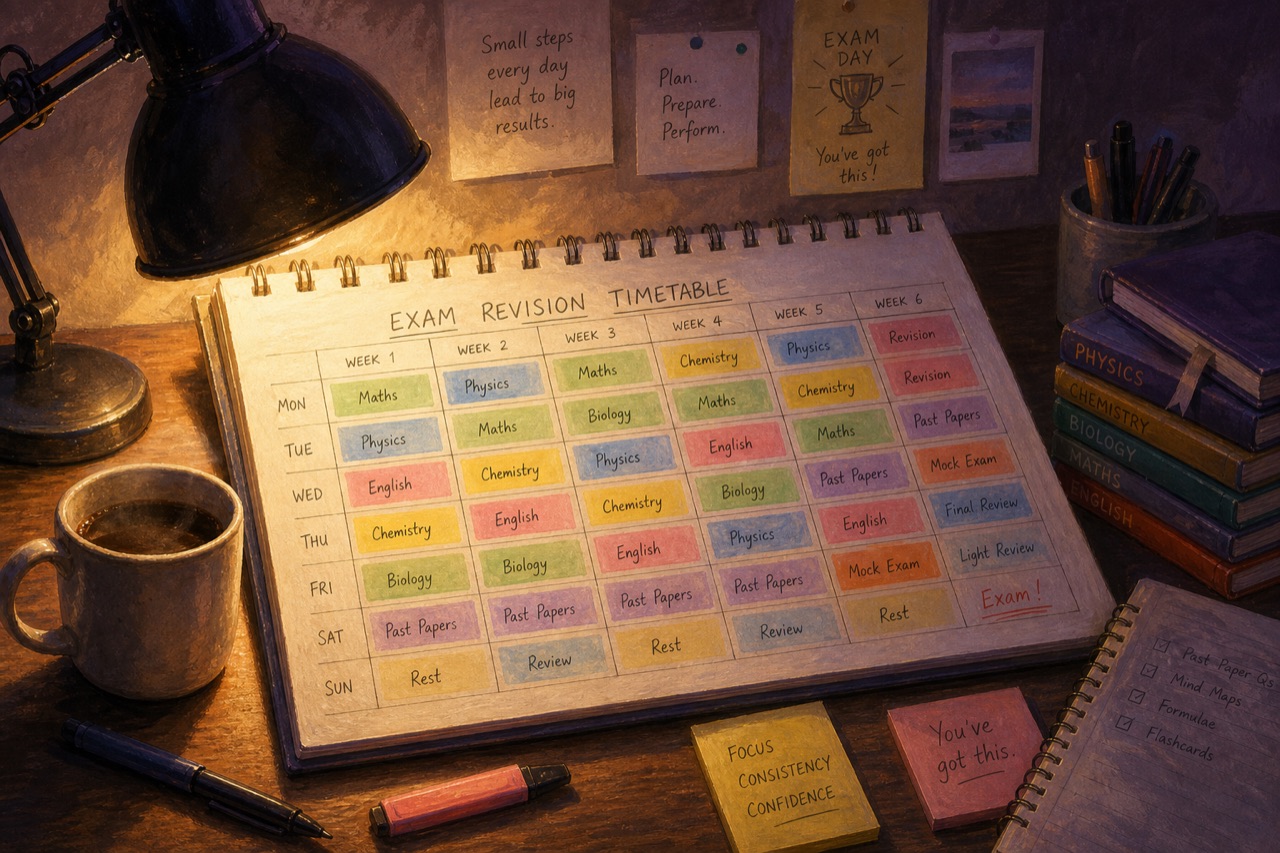
Step 1: List every exam date and syllabus chunk
Write the real dates: SAT Saturday, ACT window, GCSE/A-Level papers, HSC/VCE blocks, Leaving Cert sittings, midterms, finals. Under each, list examinable topics — from the official outline, not your vibes.
Related on GeekFlux: continue with Exam Prep hub, GCSE revision, SAT study plans, and ATAR revision.
Step 2: Count available study days
Subtract travel, work shifts, sports, and religious holidays. If you have 40 real days and 80 topics, you cannot “do everything deeply.” You must triage.
Step 3: Assign first-pass learning, then spacing
- First pass: learn or re-learn the topic (notes, class, textbook).
- Schedule reviews at +1, +3, +7, +14 days.
- Color-code subjects so no day is five hours of one colour.
- Cap new learning at 60–90 minutes on weekdays; protect evenings for review.
Put the timetable on autopilot
Revu turns topics into a spaced calendar with reminders so exam season reviews actually happen.
View on App Store →Step 4: Build the final two weeks differently
Stop opening new chapters. Switch to mixed past papers, timed sections, and weak-topic repair. Interleaving feels worse and predicts better exam transfer.
Step 5: Add buffers like an adult
- One empty half-day per week for overflow.
- A full buffer weekend before the first high-stakes paper.
- Sleep as a scheduled block — memory consolidation is not optional.
Regional notes (same method, different labels)
- US/Canada: SAT/ACT benefit from spaced vocab + timed sections; AP/IB and provincial exams need topic maps.
- UK/Ireland: GCSE/A-Level/Leaving Cert — past papers are the curriculum in disguise; schedule them early.
- Australia: HSC/VCE/ATAR — weight by assessment contribution; do not ignore school-assessed tasks while chasing the final exam.
A timetable survives when it expects disruption. Design for the week you will actually live, not the week you wish you were.