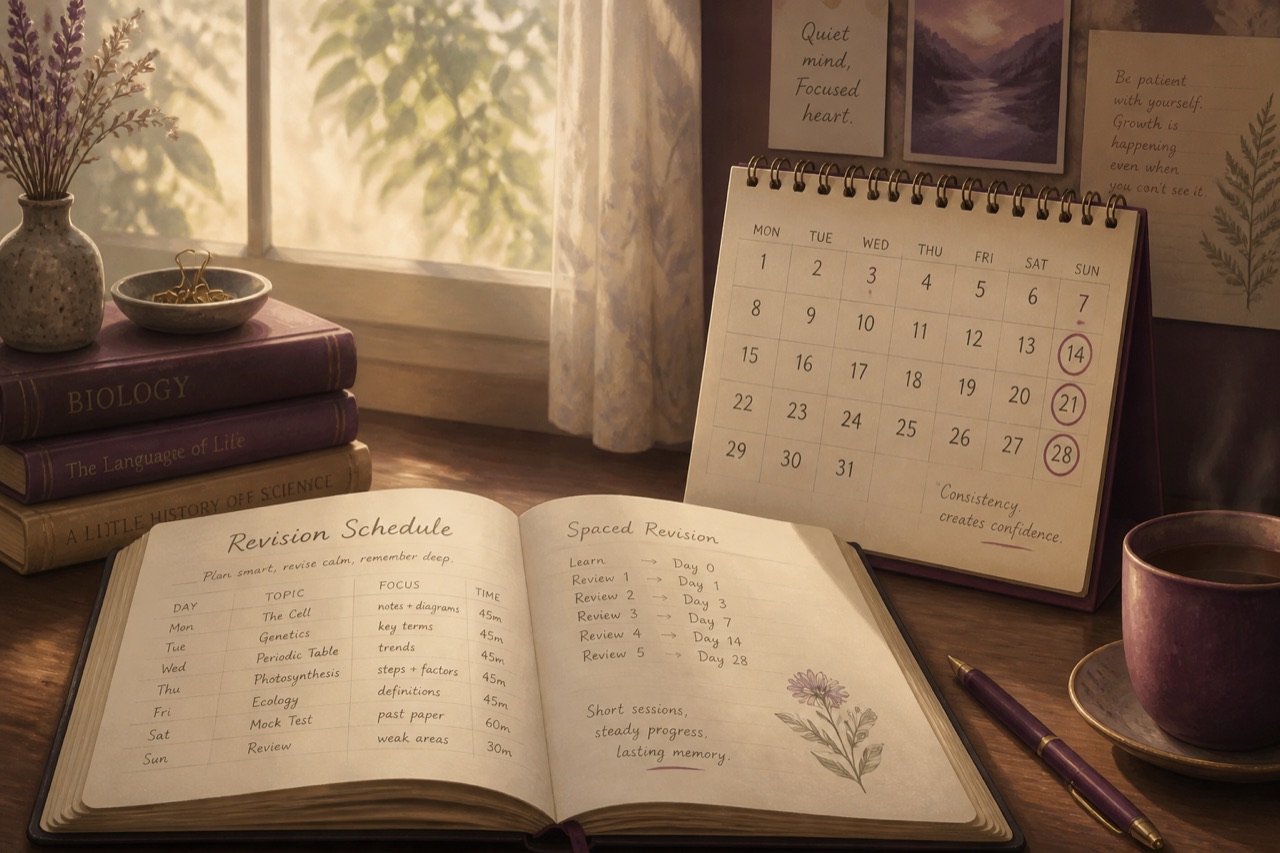
Many students assume effective studying depends on long hours and intense concentration. In practice, the most reliable progress usually comes from structure. When you know what to study, how to review it, and how to measure understanding, learning becomes less stressful and more productive.
Related on GeekFlux: continue with active recall, Cornell notes, and building a study habit.
Why motivation fails and systems hold
Motivation is weather. Systems are climate. Exam seasons in the US (SAT/ACT windows), the UK (GCSE and A-Level blocks), Australia (HSC/VCE/ATAR), and Canada (provincial exams and OSSD milestones) all share the same failure mode: students sprint when fear peaks, then crash.
A GeekFlux desk note from reviewing dozens of study guides: the ones that last are boring on purpose — a weekly plan, a review cadence, and a way to see progress without refreshing a grade portal every hour.
The three loops of a learning system
- Plan — list topics by subject and exam date; assign them to calendar days, not vibes.
- Review — revisit material on expanding intervals (1 day, 3 days, 1 week, 2 weeks) before it evaporates.
- Prove — close the notes and retrieve: explain aloud, do questions, or teach a friend.
Rereading feels productive because it is fluent. Retrieval feels awkward because it is effective. Swap one reread session per day for a closed-book check and retention usually jumps within two weeks.
Try RevuTurn your study plan into scheduled reviews
Revu builds a spaced-repetition calendar with reminders so revision happens before topics fade — without building flashcards.
View on App Store →Build a week you can repeat
- Pick 3–5 priority topics, not fifteen.
- Protect one 20–30 minute daily review block — same time if possible.
- Leave buffer days before big exams for mixed practice, not new chapters.
- Track reviews completed, not hours sat at a desk.
Tools that support the system (not replace it)
A planner that schedules revision reminders reduces the mental tax of “what should I do tonight?” A focus reader helps when PDFs are the workload. A habit tracker makes the daily review slot visible. None of them replace judgment — they remove friction.
The best study system is the one you still open in week six.
A closing thought
Sustainable learning is not a personality trait. It is a calendar with reviews, a habit of retrieval, and enough kindness to restart after a missed day without discarding the whole plan.