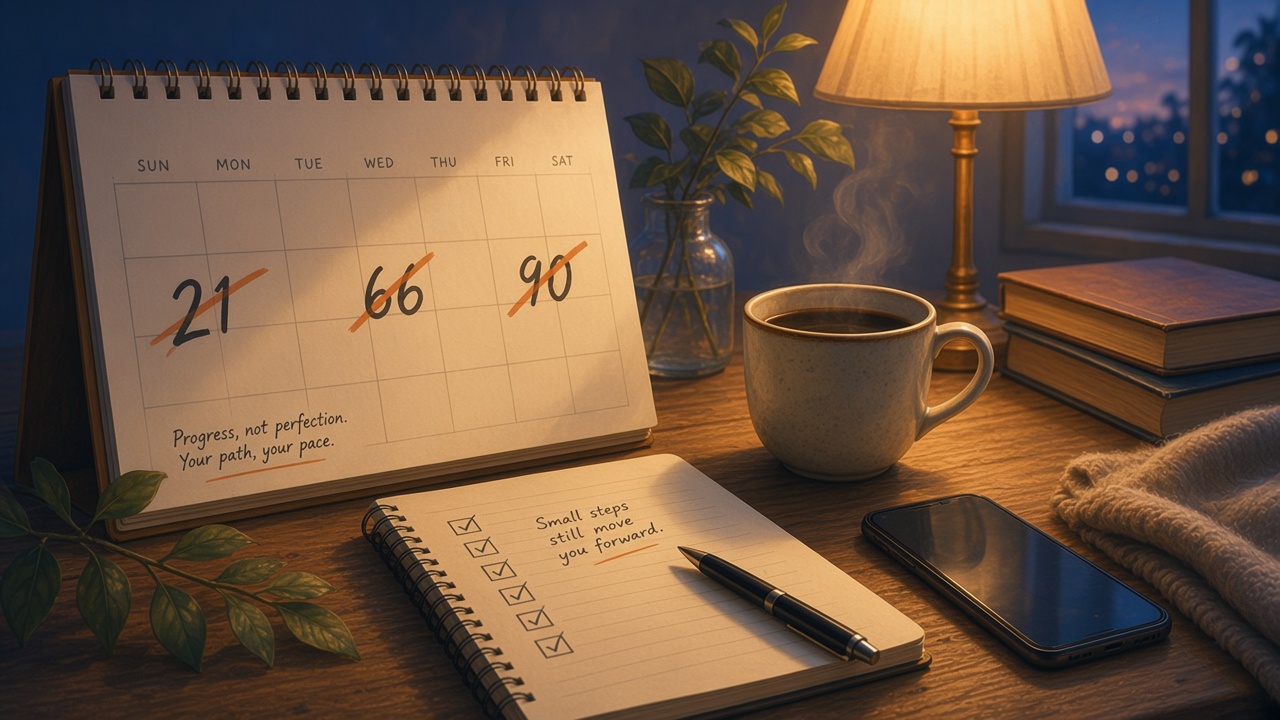
Evening routines are loans to morning you
Productivity culture obsesses over 5 a.m. alarms. The leverage is often earlier, in the opposite direction. What you do in the last hour before sleep determines tomorrow’s attention budget — how fast you wake, how brittle you feel, whether the first task starts or stalls.
An evening routine is not self-care aesthetics. It is infrastructure: shutdown, transition, sleep protection, and a tiny deposit toward the next day’s first win.
The three jobs of a good night sequence
- Close the day — stop work mentally, not only physically.
- Lower arousal — dim light, predictable sensory cues, less novelty.
- Pre-load tomorrow — one priority, physical prep, no midnight planning marathons.
Miss any leg and the stool wobbles. Many people skip shutdown and wonder why their brain rehearses Slack threads at 1 a.m.
Shutdown: end the open loop
Zeigarnik effect territory: unfinished tasks linger in working memory. A five-minute shutdown ritual breaks the spell. Write tomorrow’s single MIT (most important task). Scan the calendar. Close laptop tabs you will not touch tonight. Say a phrase, play a song, walk the dog same route — same cue every night so your nervous system learns the day is over.
| Step | Time | Purpose |
|---|---|---|
| Shutdown note | 3 min | Capture loose ends + tomorrow’s MIT |
| Environment reset | 5 min | Desk, bag, clothes — reduce morning friction |
| Hygiene stack | 10 min | Fixed order: wash, teeth, skin — autopilot cues |
| Wind-down | 15–20 min | Dim light, paper book, stretch, no feeds |
Light, screens, and the melatonin ledger
Circadian research is clear enough for practical use: bright blue light late delays sleep onset. You do not need a cave. You need a gradual dimming curve — overhead off, lamp on, phone on grayscale or in another room. If you read on screen, prefer e-ink and fixed end time over infinite scroll.
Replace the phone slot with something equally easy: kettle, paperback on pillow, podcast with sleep timer. Friction asymmetry again — make the bad path harder, the good path default.
Try StreaklyStack the shutdown until it runs itself
Track your evening sequence in Streakly — same anchor, same steps — until closing the day is as automatic as brushing your teeth.
View on App Store →Habit stacking after a fixed anchor
Attach new steps to something that already happens: after I finish dinner, I will run shutdown; after shutdown, I will set out tomorrow’s notes; after that, phone on charger in hall. BJ Fogg’s tiny habits logic applies at night too — start with two minutes per step until the chain holds.
Minimum viable routine for chaotic weeks
Travel, exams, and sick kids will blow up the spa version. Keep a portable three-step: (1) write tomorrow’s MIT on any scrap, (2) hygiene, (3) lights down. Consistency of anchor beats perfection of ambiance. Missing the aesthetic routine but keeping shutdown preserves most of the benefit.
Treat bedtime like a deadline you respect. Morning focus is the deliverable.