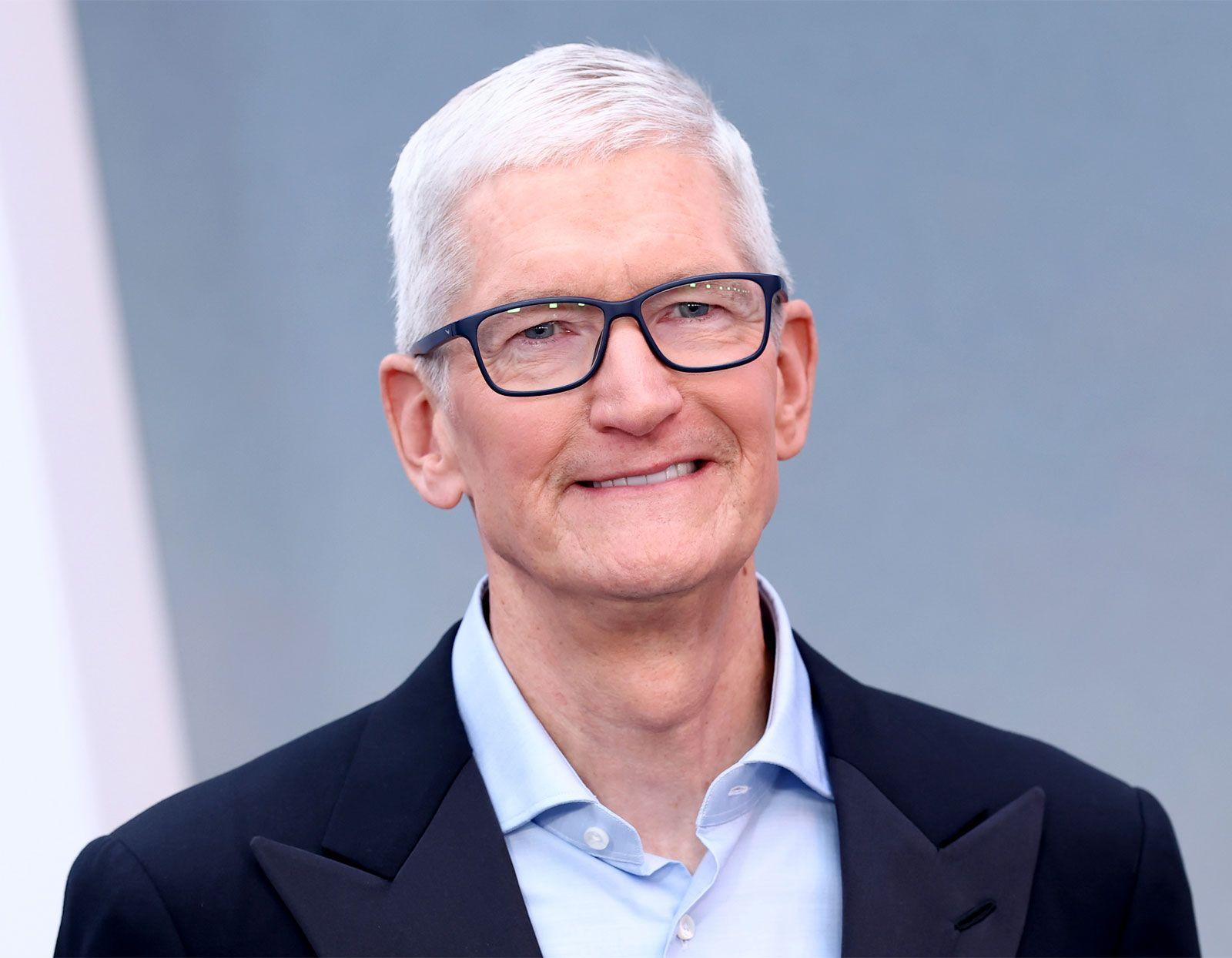
There are leaders who arrive like thunderclaps, and then there are those who reshape the sky without making a sound. Tim Cook belongs firmly to the second kind.
A small-town beginning, a global orbit
Long before glass towers and trillion-dollar valuations, Cook's story began in Robertsdale, Alabama. His father worked in a shipyard, his mother at home, and somewhere in that daily rhythm, discipline took root.
He studied industrial engineering at Auburn University, later adding business training at Duke University. His early career was less about spotlight and more about systems. At IBM he learned operations. At Compaq he refined supply chains. He was, in many ways, learning to conduct an orchestra made of logistics.
The leap into Apple’s orbit
In 1998, Steve Jobs invited Cook to join Apple at a moment when the company was still recovering, not yet ascendant. Cook accepted anyway, trading certainty for conviction.
He was not the public face of industrial design, nor the voice of product mythology. His contribution was subtler and foundational: inventory discipline, supply chain excellence, and execution at scale. The machine began to run with a kind of operational poetry.
Becoming the steward of a legacy
When Jobs passed the torch in 2011, the question was immediate: could anyone carry a role that had become more mythology than job description?
Cook did not try to become Jobs. He became, unmistakably, Cook.
Under his leadership, Apple expanded across new categories and recurring services. Apple Watch became a defining wearable. AirPods entered daily life with near-invisible ubiquity. Apple Music and Apple TV+ reinforced a broader ecosystem strategy. Over that era, Apple’s valuation climbed from roughly $350 billion to over $4 trillion.
The present moment: a turning page
In 2026, Cook is stepping down after 15 years as CEO, transitioning to executive chairman while John Ternus prepares to lead the next chapter.
The handoff feels less like departure and more like continuity by design. His era leaves a company of enormous scale and profitability, a deepening global footprint in markets like India, and a reputation for operational rigor even as new challenges, including artificial intelligence, redraw the competitive map.
The man behind the machine
Cook's leadership style has often been described as calm, methodical, almost meditative. He has framed Apple's purpose as enriching lives, and that ethos has appeared in long-term bets on privacy, sustainability, and inclusion.
He also became the first openly gay CEO of a Fortune 500 company, changing business culture in a way that was steady, visible, and never performative.
A legacy written in invisible ink
If Steve Jobs was the painter, Tim Cook was the architect of the gallery. He did not just ship products; he built systems capable of carrying those products to billions.
His genius was not spectacle but scale, not noise but reliability. You rarely notice the person who makes everything work perfectly, until they step away.