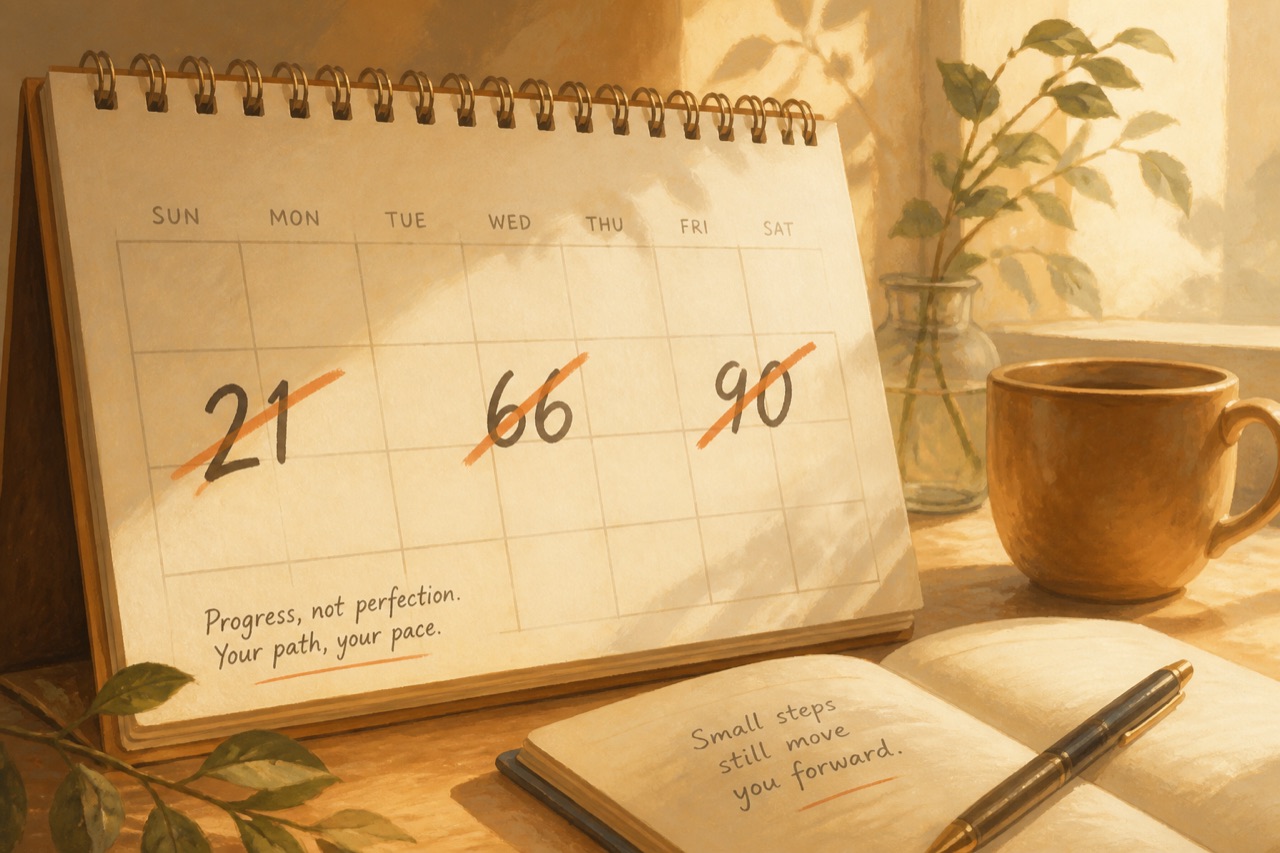
Where 21 days came from
The “21 days” line is usually traced to plastic-surgery anecdotes popularized in mid-20th-century self-help, not to a controlled habit study. It survived because it is memorable — the worst reason for a scientific claim to survive.
Related on GeekFlux: continue with best habit trackers, consistency over motivation, and building habits with ADHD.
What Lally et al. actually measured
In a 2010 study published in European Journal of Social Psychology, Phillippa Lally and colleagues at University College London tracked how long it took for new everyday behaviours to feel automatic. The median was about 66 days, with a wide range. Simple habits moved faster; complex ones lagged.
Takeaway: calendars that promise transformation by day 21 set you up to feel broken on day 22.
Try StreaklyTrack the streak without the fake deadline
Streakly keeps daily check-ins simple so you can aim for consistency across months — not a magical day-21 transformation.
View on App Store →Design for the distribution, not the slogan
- Start tiny (two-minute version) so early reps are completable.
- Attach the habit to a reliable cue (after coffee, after locking the door).
- Expect missed days — they were common even among people who succeeded.
- Judge progress by weekly completion rate, not a single sacred number.
Why this matters in September
The “fresh start effect” (Dai, Milkman & Riis, 2014) shows people feel more motivated at temporal landmarks — New Year, birthdays, and yes, new school terms. Use the energy. Do not invent a fake finish line that expires before automaticity arrives.